Surrounded by People, Alone in Motherhood
Touched, needed, and spoken to all day — and starving for one real conversation. Why contact isn't connection, and how to build support that actually sees you.
By The Her Shift Editorial Team
Published July 11, 2026
8 min read

Kayla, 32, heard her name for the first time at 6:52 a.m., through the baby monitor, before her eyes were fully open. It is now 7:40 p.m. — twelve hours in which "Mama," or some version of it, has been said at her, sung at her, screamed at her, whispered wetly into her neck roughly four hundred times. She has been climbed on, nursed, wiped, gripped, and slept against. Her mother-in-law visited at lunch. Her husband got home at six. The group chat pinged all day about a cousin's birthday party. On paper, she has not been alone for one minute since Tuesday.
Standing at the sink while bath water runs upstairs, she does the math that undoes her: in those twelve hours of hearing her own name, nobody asked her a single question about herself. Not one — not her day, not her opinion, not the book that has been dying on her nightstand since March. Every sentence aimed at her today was a request. She used to coordinate events for a nonprofit; she used to have opinions people wrote down. Now she is the most-touched, most-needed, least-known person in her own house, and she cannot say that out loud because every draft of the sentence sounds ungrateful — and she is grateful, which is somehow the trap. The impolite version arrives while she rinses a sippy cup: she could be replaced by a very warm service and it might take this household a week to notice the difference.
About this story: The opening vignette is a composite based on recurring public discussions and common experiences. Names and identifying details are fictional. It is not a patient testimonial.
That gap — between contact and connection, between being needed and being known — is the actual subject here, because Kayla is not alone for lack of people. She is alone because she is present all day as a function and almost never as a person. This article looks at where maternal isolation really comes from, when loneliness travels with postpartum mood or anxiety symptoms that deserve proper screening, and how to build support around specific asks instead of waiting to be noticed.
Contact is not connection
Here is the distinction that makes Kayla's math make sense: loneliness is not the absence of people. It is the absence of feeling known. Researchers who study social health draw exactly this line — the National Institute on Aging distinguishes social isolation (objectively few contacts) from loneliness (the distress of connection that doesn't match what you need), and notes you can be lonely while surrounded by people. A mother in the early years is often the extreme case: maximal contact, minimal knownness. Every interaction runs one direction — need flowing toward her — and none of it requires her to exist as a person with an interior life.
That is why "but you're never alone!" lands so badly, and why the guilt is misplaced. Loving your children and being starved of adult reciprocity are not in tension. One is about them. The other is about you still existing.
Where the isolation actually comes from
Maternal loneliness is usually several mechanisms stacked, and they untangle better one at a time.
The schedule barrier. Naps, feeds, bedtimes, and the sheer logistics of leaving the house with small children shrink your radius to a few predictable miles and a few unpredictable windows. Friendships that ran on spontaneity — dinners, late phone calls — stop fitting the container, and unless both sides adapt the format, they quietly starve. Some of those friendships were already drifting for their own reasons; that loss deserves its own grieving.
The identity loss. The parts of you that generated connection — work, humor, competence, curiosity — can feel archived. When every conversation you're offered is about the baby, it starts to seem like the baby is the only interesting thing about you. It isn't. But you may need to be the one who changes the subject, because most people follow the script they're handed.
The partner disconnection. Two exhausted adults running a small logistics company out of their kitchen can go weeks exchanging only operational updates. Sitting next to someone every night and feeling unseen by them is its own particular loneliness — often sharper than solitude. Sometimes what's underneath is an unequal division of the noticing-and-planning labor, which breeds resentment that masquerades as distance; the mental-load conversation is frequently the real repair.
The comparison filter. Everyone else's motherhood, viewed through a screen at 3 a.m., appears communal and glowing. You are seeing their highlight reel from inside your unedited footage, and the gap reads as personal failure. It is neither personal nor failure.
When loneliness is also a symptom
This part matters enough to say plainly. Loneliness can be a circumstance — and it can also travel with, feed, or mask a postpartum mood or anxiety condition. Depression during and after pregnancy is common and treatable; the Office on Women's Health and the American College of Obstetricians and Gynecologists both describe symptoms that go beyond "baby blues," which typically fade within about two weeks of birth. Take seriously — at any point in the first year and beyond — persistent sadness or emptiness, hopelessness, heavy guilt or worthlessness, anxiety or racing worry that won't settle, anger that frightens you, sleep trouble beyond the baby's schedule, losing interest in things you used to enjoy, pulling away from everyone, or feeling disconnected from your baby.
None of those mean you are a bad mother. They mean something treatable may be underway, and screening is a routine part of postpartum care — you can raise it at any visit, yours or the baby's pediatric visits, in exactly these words: "I don't feel like myself, and I'd like to be screened for postpartum depression."
And the part that must never be buried: if you have thoughts of harming yourself or your baby, or the feeling that your family would be better off without you, that is an emergency deserving immediate care, not a thing to white-knuckle. In the United States, call or text 988 (988 Suicide & Crisis Lifeline); call 911 or go to emergency care when there is immediate danger. Telling someone is the strong move, and help works.
Building connection that fits this life
Once safety and screening are handled, the loneliness itself responds to structure better than to willpower. What works looks unglamorous:
Convert one friendship to the new format. Pick the friend you miss most and offer the honest version: "I can't do dinner, but I can do a stroller walk Saturday at 8 a.m., or voice memos while I fold laundry." Real friends mostly haven't left; they're waiting for instructions.
Choose repetition over events. One recurring thing — the same library story time, the same parent group, the same playground at the same hour — beats ten one-off outings, because familiarity is what turns other tired parents into friends. Aim for weeks of showing up, not instant chemistry.
Say one true sentence. Connection starts where performance stops. "I love her and I'm so lonely I could cry" said to one safe person does more than a month of "we're great!" Watch what happens: the other mother at the swings usually exhales and says same.
Rebuild a two-person hour. With your partner, trade operational talk for fifteen protected minutes that are about you two — no logistics, phones down, after bedtime. It feels artificial for a week and then it feels like the marriage again.
Reclaim one identity block. One hour a week that belongs to pre-baby you — the run, the sketchbook, the class — with childcare arranged as a fixed cost, not a favor you must earn. You are not leaving your child; you are returning to your life so there's a self to parent from.
The support map: specific asks, not vague help
"Let me know if you need anything" is where support goes to die, because it hands you — the depleted person — the job of assigning work. A support map does the assigning in advance. Take a page and make three columns:
- What would actually help. Not feelings — tasks and slots. Tuesday 5–7 p.m. covered. A meal on Thursdays. Someone to hold the baby while I shower. A weekly walk where someone asks about me.
- Who could realistically do it. Partner, your mother-in-law who keeps offering, the friend who says "anything!", the neighbor, a paid sitter, a postpartum group. Match names to items. Notice how many people have already volunteered vaguely; you are converting their currency.
- The exact sentence to ask with. Specific, dated, easy to accept: "Could you take Wednesday bath time so I can call Dana?" "When you say you'd love to help — could that be a Costco run this week?" People say yes to specifics at rates that will surprise you.
Then send two of those sentences today. Not five. Two.
Kayla's version started smaller than a village: one 8 a.m. Saturday walk with a friend who was told the truth, one screening conversation she scheduled for herself at the six-month pediatric visit, and a mother-in-law whose "anything" became Tuesday afternoons. She is still touched all day. But twelve hours no longer pass without someone asking what she thinks — partly because the people who love her finally knew what to do, and partly because she stopped waiting to be asked.
References
- Postpartum Depression — Office on Women's Health. https://womenshealth.gov/mental-health/mental-health-conditions/postpartum-depression (accessed July 2026).
- Postpartum Depression FAQ — ACOG. https://www.acog.org/womens-health/faqs/postpartum-depression (accessed July 2026).
- Loneliness and Social Isolation — Tips for Staying Connected — National Institute on Aging. https://www.nia.nih.gov/health/loneliness-and-social-isolation/loneliness-and-social-isolation-tips-staying-connected (accessed July 2026).
- 988 Suicide & Crisis Lifeline — 988 Lifeline. https://988lifeline.org/ (accessed July 2026).
Sources
Every source below is publicly checkable. Dates show when we last verified the link and the claim it supports.
- Office on Women's Health. Postpartum Depression. Last checked July 11, 2026.
- ACOG. Postpartum Depression FAQ. Last checked July 11, 2026.
- National Institute on Aging. Loneliness and Social Isolation — Tips for Staying Connected. Last checked July 11, 2026.
- 988 Lifeline. 988 Suicide & Crisis Lifeline. Last checked July 11, 2026.
Why trust this article?
- Written by The Her Shift Editorial Team — a real editorial team, not a fabricated review board.
- The opening vignette is a disclosed composite, never a testimonial, per our editorial policy.
- Factual claims rest on 4 linked sources, each verified against our source registry.
- Last updated July 11, 2026.
- Found an error? Email hello@example.com and we’ll investigate and correct it publicly.
This article is educational and not medical advice. It cannot diagnose you, and it never replaces an evaluation by a qualified clinician who can examine you and your history.
Related reading

Relationships & Identity
The Friendship Grief Nobody Names
Nobody died and nothing was said — the friend just stopped making plans. Why losing a friendship to drift is real grief, and what repair or release looks like.
9 min read

Career, Money & Reinvention
The Tax of Being the Reliable One
She never drops anything, so everything gets handed to her. How the competence trap works — and how to stop before collapse sets the boundary for you.
9 min read
Motherhood & Mental Load
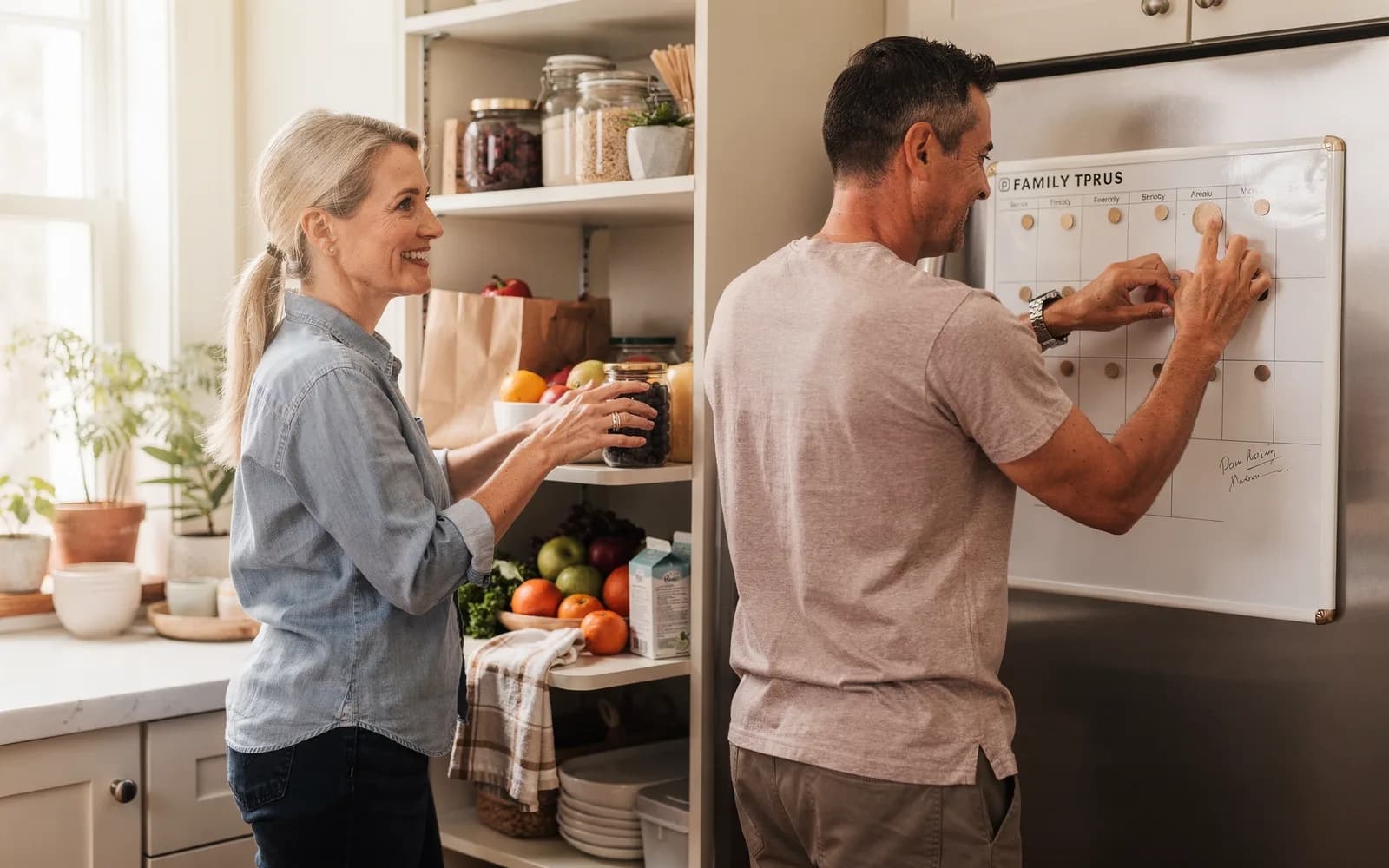
She Wasn't Asking for Help. She Was Asking for a Partner.
'Make me a list' misses the point: the list lives in her head. Why helping preserves the imbalance, and a map for actually re-dividing the mental load.
8 min read


The Sunday Shift
The honest version of women's wellness, once a week.
One email a week: what we published, what we corrected, and one thing worth asking your clinician about. No miracle cures, ever.